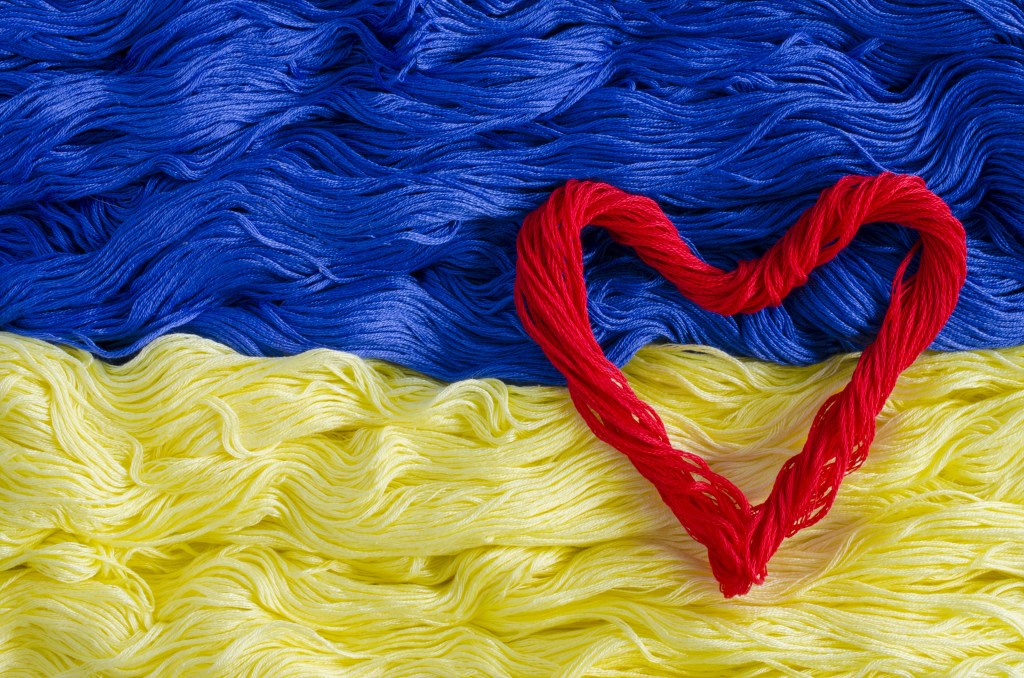
Like many of you, I have been monitoring the events happening afar away in Ukraine. I have a friend whose family has been forced to flee and has become refugees. I’ve watched the unfolding story of bombings and invading troops with horror. I’ve watched the incredible patriotism and determination of the invaded as those troops have been repelled. I’ve seen nations across the globe rise up largely in solidarity against these acts of aggression, while the citizenry of those nations have joined in rallies of support of the victims. Many of us are becoming familiar with the strains of the Ukrainian national anthem that is now being played by symphonies and performed by musicians around the world. It is both a frightening time of great divisiveness and a heartwarming time of unity. Amidst all the angry rhetoric and violence, however, I have been touched by an unexpected show of humanity and charity by Ukrainians and allies alike. It’s been inspirational to see.
One of the things I hate about war, besides the tragic death and destruction, is the vitriolic language used to demonize the other side. You see this throughout history: citizens get tarred by the brush of their leader’s actions, with assumptions that all people of whatever nation you are currently at war with are the mostly vile people on earth. As a result we end up with Islamaphobia or Japanese interment camps, for example.
I have been impressed, however, at the many attempts to not demonize the Russian people. At least twice President Zelensky (the Ukrainian President) has spoken to the Russian citizenry, reminding them of their commonalities and long-standing relationships. He has made it clear that his argument is with the Russian president who ordered the aggression, not with the citizens who live under the thumb of their dictator.
I have seen reports (I haven’t been able to confirm their veracity) of young Russian soldiers being captured and then allowed by captors to call their families back home. Many of these soldiers were conscripts forced to sign contracts with the military, stripped of their cellphones, and then without any warning sent to Ukraine. Many of these young men seem terrified. The humanity of seeing these soldiers as frightened young men forced into a situation not of their choosing instead of the evil enemy to be destroyed in every way has been touching.
In addition to the Ukrainian military response to these young soldiers has been the social media response. I have spent an inordinate amount of time following the events overseas due to my being sick this past week and unable to do much else and therefore have an unusually large sample of Twitter comments to draw on. I have dreaded reading comments to various posts because Twitter is often a hotbed of angry hateful bloodthirsty sentiment. What I found instead was an outpouring of compassion for the soldiers who are merely following orders. I’ve read call after call for mercy and kindness, with a plea for the world community to help these soldiers not face retribution back home.
I have thought a lot about this, obviously. I have never lived through an invasion. My life, or even my way of life, have never been threatened. I have never experienced the horror of seeing loved ones killed by missiles or bombs. I’ve never had to flee. I have had people not treat me well, however, and sometimes treat me as though I’m an enemy needing to be emotionally or socially destroyed. I have been treated with careless disregard or indifference. I will admit that those times have seemed huge to me. I have been known to hold grudges. I’ve been known to not respond with a Christlike compassion or care.
Looking back I see how easy it is to fall into the trap of resentment and anger. It’s something I’ve been working hard on overcoming. Watching these moments of kindness and charity in the midst of brutal unprovoked aggression, however, puts the the pettiness of such anger in perspective and the reality of Christ’s call to love our enemies into clear focus.
It’s easy to love even our enemies on paper or from afar, but so much harder to apply it in face-to-face situations. The teaching, however, was not to love our enemies and bless those who curse us; to do good to them who despitefully use us and pray for those who despitefully use and persecute us when it is convenient or when we aren’t facing our enemies. Instead this admonition is meant for those very times when it is hardest: when we are facing those who would be our foes.
This doesn’t mean we don’t defend ourselves, but instead it just means that we do all things in love. We see the people above the actions. We love our families, our neighbors, our countrymen, and our supposed enemies. We pray for those who would do us harm and pray for hearts to turn. We pray for a cessation of hostilities that people – on both sides of conflict – can escape with lesser harm. This works for issues large and small, personal or communal. It is a commandment for all seasons and all situations.
Loving our enemies. It sounds both simple and naïve, but it is the only path to peace – in our hearts and in the world. I am in awe of the goodness of many people I have so far seen in the war in Ukraine. I am in awe of those who easily forgive and bless. I hope that I can be more like them.

 Look to God and Live... Joyfully!