I need to preface this post with the following disclaimer: I wrote this between 2 and 3:00 in the morning Sunday morning. I am not fully accountable for any mixed analogies or crazy leaps of “logic.” Just warning in advance 😁
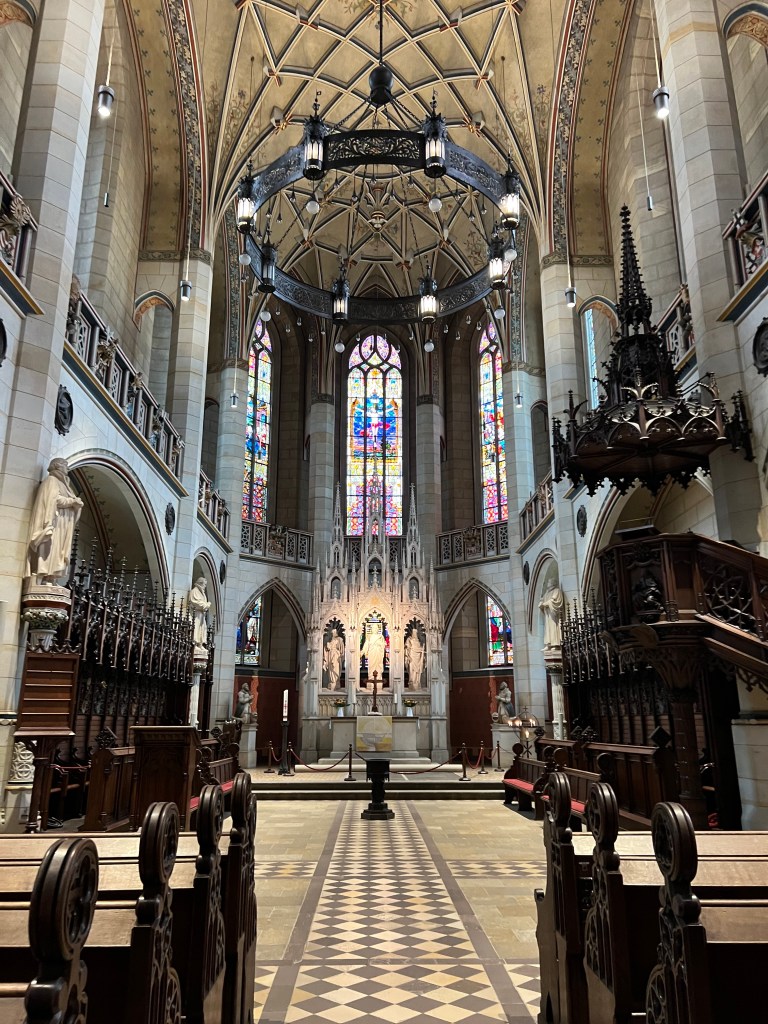
On October 31, 1517 Martin Luther nailed his now famous 95 Theses on the door of the church in Wittenberg, Germany. In May Elizabeth and I were able to visit that church and see the still-preserved door (without the document still nailed, of course). Walking in that chapel I felt a distinctly strong spirit that I was in a holy place. Mind you, I’m not Lutheran and I don’t have any arguments with my Roman Catholic friends. What I felt in Wittenberg, however, was the feeling that I was standing in a place that changed the world.

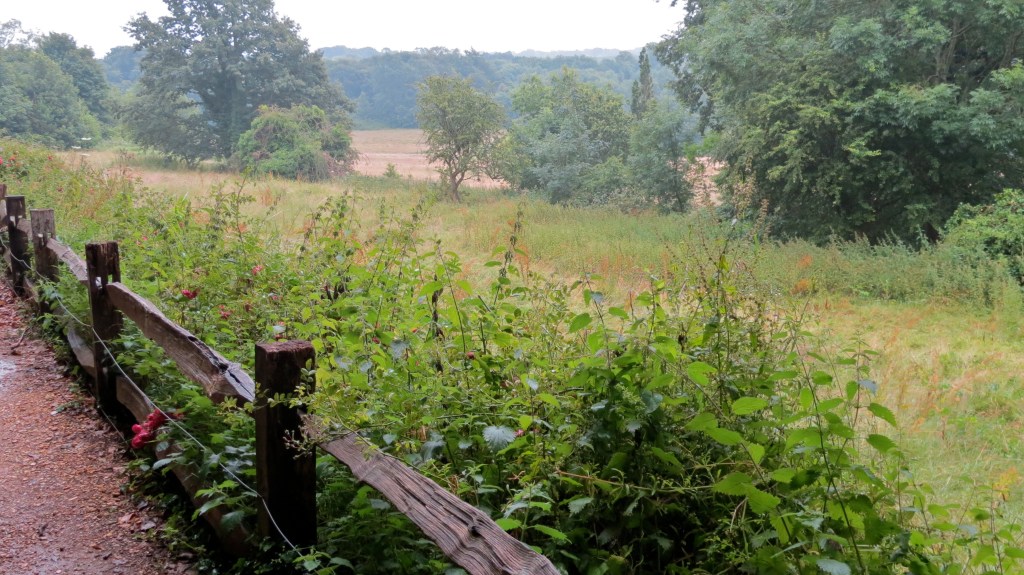
I have had that same feeling before. In 2014 our family traveled to the United Kingdom. In southern England we stopped at the battlefield of Hastings. It was there in 1066 that William the Conqueror defeated Harold and became King of England. I have toured many battlefields in the United States and Europe, but Hastings had a unique feel to it. I recognized in a way more profound than ever before that the events in that place on that day changed the world.
There have been a handful – a small handful – of other similar experiences. I’ve thought a lot about that over time. Why? Why did I feel this strong spirit in the places I did and not in others? I’m a history buff to the nth degree. I have now traveled through all fifty states and several European countries touring largely historical sites. It’s my love. I have seen many places that have moved me, many that have amazed me, but only a handful of sites reach deep into my soul and testify that the world was truly changed in a permanent and positive way because of what occurred there. I have more places on my bucket list to see and I’ll be curious what places evoke what emotions.
The 95 Theses rebellion by Martin Luther started small. A local priest in Wittenberg protested against what he viewed to be abuses and false doctrines in the church. He made his objections known in a lengthy list. Wittenberg is a small town. It was once more influential than it is today, but it was still a small town then. It was never home of the popes or Holy Roman emperors. It was a town that seemed to attract artisans and philosophers and deep thinkers at the dawn of the 16th century, much like Concord, Massachusetts did in the mid-1800s or Virginia and Massachusetts did in the 18th century.
As we all now know, Martin Luther’s small protest did not stay in Wittenberg. It quickly spread throughout Christendom. In its wake came wars of religion, mass murders, inquisitions, and martyrdoms. Starting with Luther there sprang up reformers throughout Europe, not all agreeing with Luther or even each other. In 1553, 36 years post-Luther, Michael Servetus, a reformer and so-called heretic to both the Catholics and Calvinists in Geneva, was burnt at the stake. In 1572 thousands of French Huguenots were massacred en masse by Catholic hardliners in Paris. Less than a century after Luther nailed his Theses my ancestor Hans Landis – an Anabaptist preacher – was beheaded by leaders of the Swiss Reformed Church, his body thrown into the river running through Zurich, Switzerland. In 1620, a mere century and three years after Luther’s action the separatist pilgrims fled England for the new world. The horrors following Luther taking at stand in Wittenberg are myriad and heart wrenching. The result, however, has been glorious. Many countries engaged in religious warfare with each other now celebrate religious freedom and allow a much wider breadth of freedom of conscience than ever before. Individuals can study the scriptures and have individual experiences bringing those scriptures to bear in their own lives. People have greater understanding on how to access Divine Truth because they are now allowed the opportunity to search, ponder, and pray. Though the time from Luther’s initial action to our current situation has been long, in the end, what a blessing!
William the Conqueror is definitely not my favorite man. His actions upon winning the Battle of Hastings showed a ruthlessness and brutality that are unfathomable to my 21st century mind. His razing of Saxon lands, slaughter of Saxon men, women, and children, forced marriages, and the use of torture to achieve his aims horrifies me. But from that battle has sprung freedom. It took a long time, but it came. Because of William we got Henry II who codified the law, John’s angry barons who gave us the Magna Carta, colonization that was horrible but that ultimately led to the United States, and more (I could write a book on the topic if I chose, but I’ll forebear and leave it with the very vague “and more” terminology. You may fill in the blank or reach out for a discussion/debate if you wish). It was pointed out that upon King George III’s coronation in May there will be a Hindu Prime Minister, a Muslim Mayor of London, security arranged by a Buddhist Home Secretary, and the king will be accompanied on his walk to Westminster Abbey by a rabbi. The ceremony itself will be presided over by the Protestant Archbishop of Canterbury. Much good throughout the entire world has occurred due to England becoming England – an after effect of William’s victory at Hastings.
Now that you’ve had my history lesson (thank you for putting up with me), I want to bring this much closer. I have no doubt that we have experiences in our lives whose impact cannot be seen at this moment. We might see blackness, sadness, despair, or other negative responses to actions we have taken or endured, but none of really know the long-term implications. We really don’t.
I can often look back at decisions made by others and track the positive results. I’m really good at that with Ben’s experiences and Elizabeth’s life so far. What I am not good at is seeing that as well in my own life. Why? Why the heck is that??? I suspect that while I feel I am a woman of deeply-rooted faith, in reality I’m not as deeply-rooted as I thought. I’m not above believing that God has a “gotcha” out there for me. Isn’t that horrible? My mind scoffs at the very idea, but deep in the recesses of my subconscious that niggle of insecurity persists. Instead of nurturing that insecurity, however, I really want to try harder to trust that ultimately, no matter how black and bleak things might seem in the moment, God still has a purpose for everything.
There have been many times when I have felt strongly prompted by the Spirit to do something; to pursue a specific course of action. I’m trying harder and harder to follow those promptings. The problem is, however, that while sometimes I see fairly immediate positive results, more often I seem to fail at my attempts and I can’t see rhyme or reason why I went down the road I did. I seriously doubt the promptings. When I go back and think about it, however, I cannot deny what I felt as I prayed or as I sought inspiration. I absolutely do not know what the end results will be – and quite possibly I won’t discover them in my lifetime. I trust, however, that ultimately these actions will lead to good down the road.
My analogies aren’t perfect. Sorry. Obviously I’m not suggesting that William was inspired to rape and pillage England back in the day. Instead, I’m saying that out of darkness of the time the Lord brought forth many good things. Those who endured William’s horrors unknowingly paved a path for greater things in future generations. William himself could never have envisioned the impacts of his actions. There are absolutely no ashes that God cannot make beauty from; there is no sorrow or horror that can thwart His grand design. That is true on a global scale, and it’s definitely true on a personal level.
We might, like Luther, seem to light a spark that becomes a flame burning up the peace in our lives. Fear not. I do believe that God prompts us to do good for our own sakes. He uses our righteous desires to bless others – even if it takes a very very very long time.
Maybe we don’t always act on true spiritual promptings, even if we think we are. Maybe we suffer because of the actions of others. Maybe we can’t see how good can come from what’s happening right now. Or maybe we think that our speaking up will not make a difference to anyone. The truth is, however, that every action has a ripple effect that stretches far beyond our seeable horizon. Speak up anyway. Endure with faith anyway. Act on promptings anyway. Trust in God that He will turn all of our troubles to joy for ourselves and others.

 Look to God and Live... Joyfully!